
Hidden Structural Damage After a Hailstorm: What Most Homeowners Overlook
When a hailstorm hits, the damage that gets attention is usually the obvious kind-dinged gutters, cracked shingles, broken windows, or shredded siding. Homeowners walk around their property, look up at the roofline, maybe snap a few photos for insurance, and assume that what they can see is the full story.
However, hail seldom restricts itself to cosmetic damage.
Small impacts can cause vulnerabilities behind shingles, under flashing, inside wall cavities, and at points where penetrations are made into the roof. They may not leak the next day. Symptoms might not manifest even after months. Over time, they compromise structural components in expensive and sometimes dangerous ways to ignore.
Hidden structural damage after a hailstorm does not make itself known in a loud manner and is missed by people. It grows silently with the nourishment provided by moisture intrusion, temperature fluctuations, and structural shifting. The underlying deterioration is otherwise well on its way before visible signs make an appearance inside the home.
Understanding the real consequences of a hail storm, and what to do about it, is essential for protecting both your home’s safety and long-term value.
The Reality of Hail Impact on Structures
The mass of hailstones has different sizes, densities, and velocities. Hailstones vary in diameter, density, and velocity. Large hail can dent metal roofing, damage underlayment, and roof decking, which lies under the outer surface.
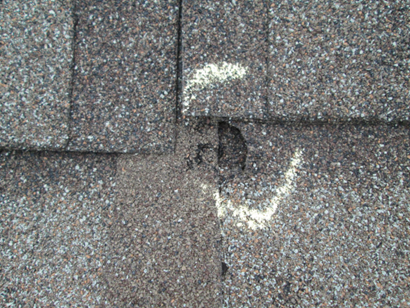
What makes hail especially deceptive is that not all damage can be determined at an early stage.
For example:
Asphalt shingles that are used can look intact but bruised under the surface. Granules that are meant to protect may be hit off, causing faster weathering. Flashing around chimneys and vents can loosen just enough to allow moisture infiltration. Fasteners shift, reducing the roof system’s resistance to uplift and water intrusion.
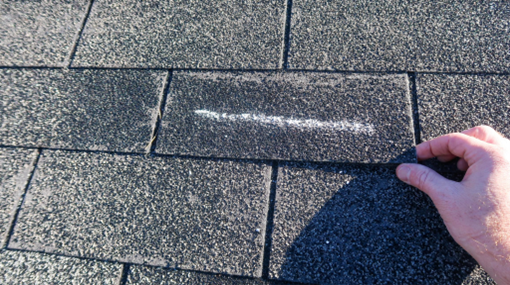
As these small failures accumulate over multiple locations, the overall integrity of the roof assembly can be compromised—along with the structural framing beneath it.
Myths and Assumptions That Lead to Overlooked Structural Damage
After a storm, many homeowners rely on quick inspections or popular beliefs. Myths that directly lead to structural deterioration that is hidden from view are:
1. “If there is no leak, there is no problem.
This assumption happens to be true, either (continued next paragraph). In reality, slow Moisture intrusion can start. Water might get into the underlayment, insulation, or decking before it ever reaches the interior ceilings. By the time a stain appears, the moisture has been present for weeks or months.
2. “Structural Damage Only Comes From Large Hail.”
However, as smaller hailstones hit at high speeds, the protective layers of roofing can be compromised (CSI, n.d.). This weakens protection materials, especially on aged or old roofing systems that are experiencing normal wear and tear.
3. “It Has Been Viewed by the Insurance Adjuster, So It Is Covered”.
The primary purpose of insurance inspections is coverage determination. They do not cover a full evaluation of the structural elements. The goal is to evaluate the visible damage and the applicability of the policy, not to investigate the structural weaknesses. Forensic or structural evaluation looks for any compromised load-bearing element, decking, or support areas.
4. “The Roof Is Only a Few Years Old.”
Risk is not non-existent in this case. Newer roofs also suffer impact damage if the storm has dense hail or high wind speeds. Installation, however, is a significant factor. It could be that an advanced system has more concealed damage than an older, correctly installed roof.
5. “It Looks Fine From the Ground. Rarely is a ground-level inspection enough
Many bruisings or flashing displacements can only be visible on closer inspection, and the visual identification review may not be sufficient.
These assumptions give a false sense of security. That false security is often what allows structural deterioration to progress unnoticed.
How Hidden Hail Damage Affects Structural Components
Moisture Intrusion
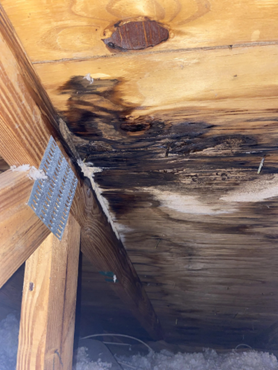
Small fractures or improperly flashed pieces force water into roofing assemblies. Some of the effects of even minimal moisture infiltration include – Saturate Insulation Roof decking, cause mold growth, and corrode fasteners and connectors.
Over time, load capacity is lost due to moisture trapped in decking or framing. Moisture causes wooden components to swell, warp, or rot. Metal connectors can corrode, losing their strength and reliability.
Decking and Sheathing Deterioration
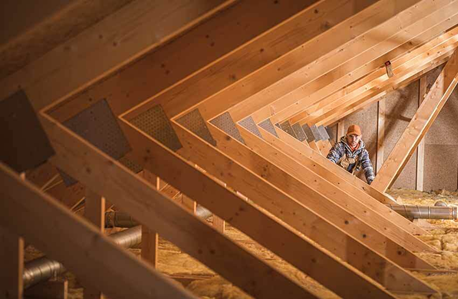
Roof decking is essential in load distribution over the rafters or trusses. Repeated absorption of moisture by the decking results in a loss of its structural integrity. This causes uneven distribution of loads.
Fastener and Connector Failure Hail impact can loosen shingles or panels, which in turn may loosen fasteners. If water reaches these connection points, the corrosion process can be sped up. Gradually, this deteriorates the resistance of the entire system against wind uplift and structural movement.
Framing Vulnerabilities
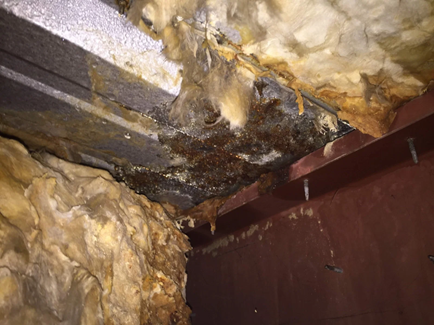
Although framing damage from hail alone is uncommon, secondary effects from prolonged moisture exposure can weaken trusses or rafters. This is especially so for framing elements in locations that experience heavy snow loads that can overburden the compromised framing with weight.
The Drawbacks of Not Investigating Structural Components
Leaving the professional evaluation a little longer after a hailstorm might seem harmless, especially if the home appears to be unaffected. However, postponement can make the damage worse in the following ways:
1. Progressive Moisture Destruction
The moisture intrusion hardly remains static. Seasonal cycles – heat, freeze-thaw cycles, humidity, etc. accelerate the deterioration process. The moisture damage, which was first seen in one infiltration point, may later spread to rot in many places.
2. Increased Repair Costs
However, in the early stages of damage on the surfaces, only limited repairs may be required. By the time the decking or framing parts are involved, partial replacement of the entire roof or structural reinforcement is necessary.
3. Insurance Issues
Many policies have time limits regarding reporting facts.
4. Reduced property value
During home inspections at the time of sale, concealed structural damage can be revealed. Hail damage that is not fully addressed may be discovered too late, compromising buyer confidence and negotiation power.
5. Safety hazards
Though not very common in the short term, safety hazards can be created due to the prolonged deterioration of structural components, especially when subjected to additional loading by environmental factors like wind or snow.
Not paying attention to hidden damage does not mean that damage does not exist. Ignoring hidden damage does not mean eliminating it.
The Process That Should Be Followed to Avoid Long-Term Damage
Proactive steps after a hailstorm can significantly reduce the risk of progressive structural weakening.
Step 1: Document the Event
Record the date of the storm and take clear photographs of visible damage. This establishes a timeline and supports future evaluations.
Step 2: Conduct a Professional Roof Assessment
A comprehensive inspection should go beyond surface-level review. It should include:
● Close examination of shingles or panels
● Evaluation of flashing and penetrations
● Assessment of granule loss
● Inspection of attic spaces for moisture indicators
● Review of decking condition
Step 3: Evaluate Structural Components
If damage is suspected beneath roofing materials, professional structural assessment is suggested. It includes reviewing:
● Roof decking integrity
● Truss or rafter condition
● Fastener performance
● Load distribution across the framing
Professional forensic structural evaluation ensures that hidden vulnerabilities are identified before they escalate and turn into heavy repair costs.
Step 4: Addressing the Repairs Promptly
Repairs should focus not only on cosmetic restoration but also on restoring structural integrity so as to ensure there are no future risks associated with the structural strength of your home.
Step 5: Maintain Ongoing Monitoring
After repairs are completed, homeowners must go for regular inspections to ensure that no secondary damage develops. Preventive maintenance reduces the likelihood of recurrence.
Why Expert Evaluation Makes a Difference
Structural damage is not always obvious. It requires trained assessment to distinguish between cosmetic impact marks and functional compromise.
Forensic structural engineers are professionals who analyze how forces from hail and associated wind loads interact with building systems. They understand how roofing materials respond to impact and how secondary moisture intrusion affects framing.
If your property has experienced a hailstorm, consulting professionals Structural Engineers ensure that evaluations go beyond surface observations. Expert analysis identifies whether damage is isolated to exterior finishes or if underlying structural components require attention too.
Bottom Line - Early Evaluation Prevents Progressive Weakening
The gap between those two realities is where most problems develop. What appears minor immediately after a storm can quietly evolve into moisture intrusion, decking deterioration, and framing compromise over time cause major structural damage to your home.
Early expert evaluation interrupts that progression. By identifying hidden vulnerabilities promptly, homeowners can:
● Protect structural integrity
● Preserve property value
● Reduce long-term repair costs
● Maintain safety and performance
Proactive inspection is not about overreacting, it is about informed protection. When structural systems are evaluated early and accurately, small problems remain small.
If your home has experienced a hailstorm, consider a comprehensive structural assessment. Call A Step in Time Structural Engineers at (605)-467-7328 to book a forensic structural inspection of your home.

